  1. Home
  2. Computing
  3. News

A clever Mac app lets you feel vibrations through the trackpad when you click a link or button

This $5 Mac app turns your trackpad into a tiny web radar

Add as a preferred source on Google
HapticPad Mac App
HapticPad

A new Mac app called HapticPad tries to make browsing more tactile. Posted by its developer on Reddit’s r/macapps community, the app uses a Mac’s Force Touch trackpad to trigger a subtle vibration when your cursor hovers over links, buttons, and input fields in the browser. So you can quite literally “feel” parts of a web page before you click them. It is a small idea, but it has the kind of obvious-in-hindsight cleverness that makes you wonder why macOS does not already do this.
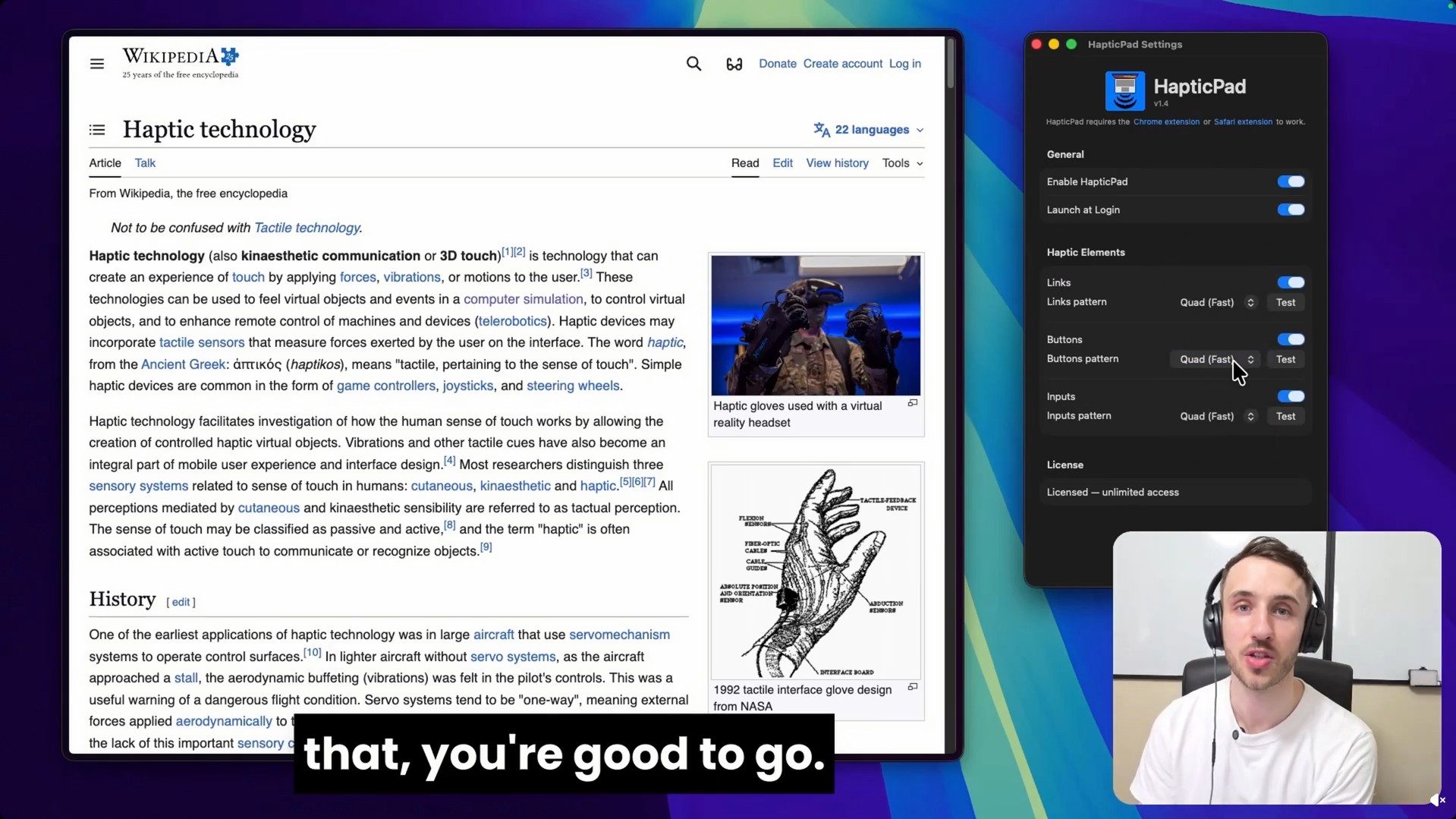
So how does this work?

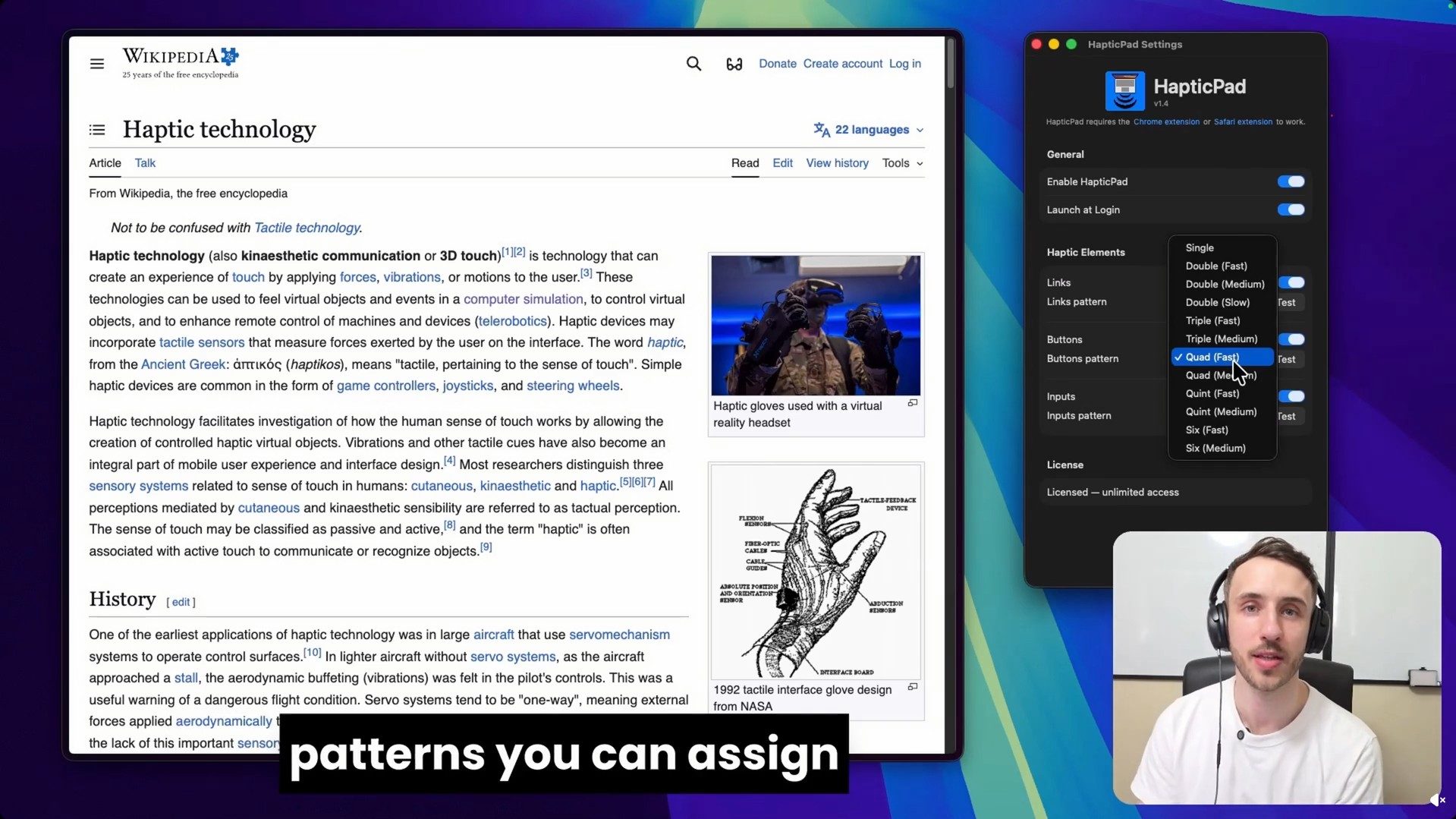
HapticPad works through a Mac app and a bundled Chrome extension. The developer says the trackpad vibration arrives in under 10ms, and the app can use different haptic patterns for different web elements. For example, links can use one pulse, buttons can use a different pattern, and input fields can use another. The official site says users can customize seven haptic patterns, including single, double, triple, and quad-style feedback.

Recommended Videos

The app is also being framed as an accessibility-friendly tool. Since it adds a physical feedback layer to browsing, it could help users who want an extra cue beyond visual highlighting. The developer says the settings are VoiceOver-compatible and keyboard-navigable. This sits broadly in the same lane as other oddball apps. But it is more practical than something like a $3 app that makes your MacBook play moans and other sounds when slapped.
Price and compatibility

HapticPad costs $4.99 as a one-time purchase and includes a 7-day free trial. It requires macOS 13 Ventura or later and a Mac with a Force Touch trackpad. The developer says the Chrome extension processes element detection locally, with no URLs, page content, or analytics leaving the Mac. It is a tiny app that seems pretty nifty. Apple has already had excellent trackpad haptics for years, and HapticPad makes them seem underused.

Vikhyaat Vivek
Vikhyaat Vivek is a tech journalist and reviewer with seven years of experience covering consumer hardware, with a focus on…
Apple just raised the price of its products by hundreds of dollars
Apple shielded customers from memory costs longer than anyone. But the inevitable has happened.
iPadOS 27 on iPad

For months, the memory crisis was everyone else’s problem, but it didn't affect Apple. While smartphone and laptop makers quickly gave in, raising prices across their entry-level and flagship products, Apple stood strong, absorbing costs through long-term supplier deals that gave it leverage most brands simply didn’t have.

The situation, I fear, has gotten worse. Earlier today, the Cupertino giant revised the prices for multiple products, including the MacBooks, iPads, and Mac Studio. 

Read more
I found 2 Prime Day budget laptop deals that make sense for students, work, and everyday use
Best Prime Day laptop deals i found under $500
Computer, Electronics, Laptop

Prime Day has no shortage of budget laptop deals, which makes it harder to tell which ones are actually worth buying. I sifted through the options and narrowed it down to two laptops that look like the best value picks if you need an affordable Windows machine for everyday work, school, browsing, streaming, and basic productivity.

ASUS Vivobook 14

Read more
This website publicly shames popular sites like Instagram, Netflix, and Spotify for being too lazy to add passkeys
Apple, Google, and Microsoft fully support passkeys, while companies like Netflix and Spotify have offered no explanation for the gap.
passkey

A new website is doing something many frustrated security experts have wanted for years. It is publicly naming big companies that still refuse to support passkeys. Called Why No Passkeys, the site tracks major platforms that continue to rely on old-school passwords even as passkeys become the safer option. If you use apps like Instagram, Netflix, or Spotify, you might be surprised to see them on the list.

The website was created by security researcher Scott Helme, who previously teamed up with Troy Hunt in 2017 to launch WhyNoHTTPS, a site that helped push much of the internet toward encrypted browsing.

Read more