1. Home
  2. Computing
  3. News

Apple’s OpenAI lawsuit just tripped over an embarrassing wrong-recipient email

Apple came for OpenAI’s trade secrets, but OpenAI had email receipts

Add as a preferred source on Google
OpenAI
OpenAI Unsplash

Apple and OpenAI’s legal battle has quickly moved beyond carefully worded court statements. OpenAI has just shared the email and message trails behind the dispute, and one exchange leaves Apple’s version of events looking questionable.

In a bluntly titled post, “Apple is getting this wrong,” OpenAI challenged Apple’s request for a preliminary injunction and accused the iPhone maker of building parts of its case around false or incomplete information. Apple wants a court to prevent OpenAI and two former Apple employees from accessing, acquiring, using, or disclosing its alleged confidential information.

Apple’s paper trail contains a hilarious mix-up

Apple previously claimed it contacted OpenAI in February about former employees retaining confidential information and received no response. The emails released by OpenAI show Apple’s outside lawyer, Gabriel Gross, contacting OpenAI General Counsel Che Chang. Gross later sent Chang a follow-up thanking him for a phone call and an offer to cooperate. Chang replied that the conversation had never happened.

Recommended Videos

Gross subsequently acknowledged that the message was intended for another former Apple employee, whose surname was Wang, and had accidentally been sent through the email chain with Chang. OpenAI characterizes the episode as Apple confusing two Asian surnames.

OpenAI also argues that Apple never raised the specific accusations that eventually appeared in its lawsuit. According to the correspondence, Apple’s counsel said it was resolving the issue before communication stopped for approximately five months. To recall, the tech giant filed its lawsuit on July 10.

OpenAI brought more than emails

Apple’s case names former employees Chang Liu and Tang Yew Tan, accusing them and OpenAI of misappropriating confidential hardware information to accelerate OpenAI’s consumer-device plans. Apple recently requested expedited document production and depositions from OpenAI employees and corporate representatives.

OpenAI also published iMessages showing Apple employees continuing to ask Liu for help locating files and answering technical questions after his departure. It adds that the messages undermine Apple’s accusation that Liu deliberately retained access, arguing that Apple failed to disconnect former employees from its systems properly.

Those exchanges represent OpenAI’s defense in an active lawsuit rather than a court’s conclusion. They do, however, create an uncomfortable contradiction for Apple. However, they do create an uncomfortable contradiction for Apple since employees have allegedly continued requesting Liu’s assistance while the company now argues that his continued access created an urgent threat. This fight could even carry considerable for its hardware ambitions.

Vikhyaat Vivek
Vikhyaat Vivek is a tech journalist and reviewer with seven years of experience covering consumer hardware, with a focus on…
Apple will finally stop making iPhone-to-Windows copy-paste such a chore
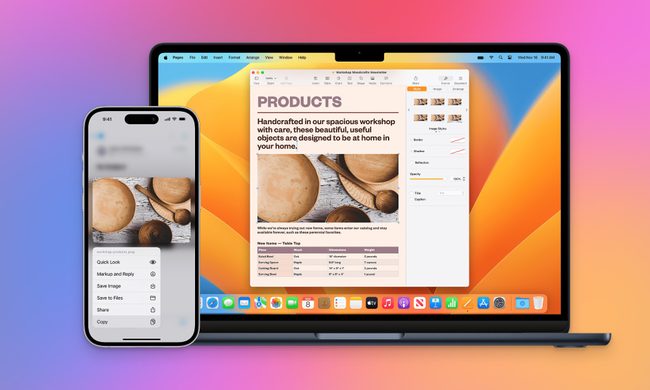
Your iPhone may finally copy and paste with a Windows PC like it should
Apple Universal Clipboard feature

Copying something on an iPhone and pasting it onto a Windows PC should be one of the least remarkable features imaginable. While this simple process seems effortless between an iPhone and Mac, Windows users are still left waiting.

Now, Microsoft is formally asking Apple to provide interoperable clipboard access through the company’s European Union interoperability process. The request, submitted on March 25, argues that iOS restrictions prevent third-party platforms from creating an experience comparable to Apple’s Universal Clipboard. Apple has now reached Phase III and committed to developing a solution.

Read more
Chrome wants more extension reviews, but good ratings won’t keep malware out
Google is testing built-in extension review prompts, but good ratings can still hide malware
malicious-google-chrome-extensions-on-web-store

Google is preparing to add extension review links directly inside Chrome, putting feedback closer to the menus people already use to manage their add-ons.

A Chromium change, first spotted by Windows Report, points to review options in the Extensions menu, the chrome://extensions management page, and extension context menus. Only eligible Chrome Web Store extensions in good standing would qualify, and the feature is still under development.

Read more
Passkeys were pushed as a safer future. Hackers have figured out ways to break those synced to Google
Google’s “uncopyable” passkeys may be easier to steal than promised
google-lawsuite-AI-Scams

Passkeys have been pushed as the safer successor to passwords. It promised protection from phishing, credential reuse, and password leaks. Google even claims that it cannot be copied or accidentally handed to someone else. But it might not be as secure as the company wants it to be.

Security researchers (Via BleepingComputer) have now found three ways malware can undermine those promises for passkeys synced through Google Password Manager. The techniques, collectively named Pass-ta-key, target Google Password Manager inside Chrome on Windows computers equipped with a Trusted Platform Module. Every attack requires malware to already be running on the victim’s computer.

Read more