
A few days ago, one of my colleagues asked me a favor. They wanted a few iOS and macOS screenshots turned into a mockup image where the UI is rendered on an iPhone and a MacBook. The problem? It was 3 am PST, which meant asking one of my design team colleagues was out of the question.
Now, there are plenty of online tools that will do it, but you either have to pay for a subscription (as in Canva), or sign up to buy usage credits after a few free trials. Moreover, these editors limit you to a handful of design presets. I turned to Anthropic’s Claude, and within half an hour, I had a screenshot-to-mockup editor built for the entire team to use. Take a look:
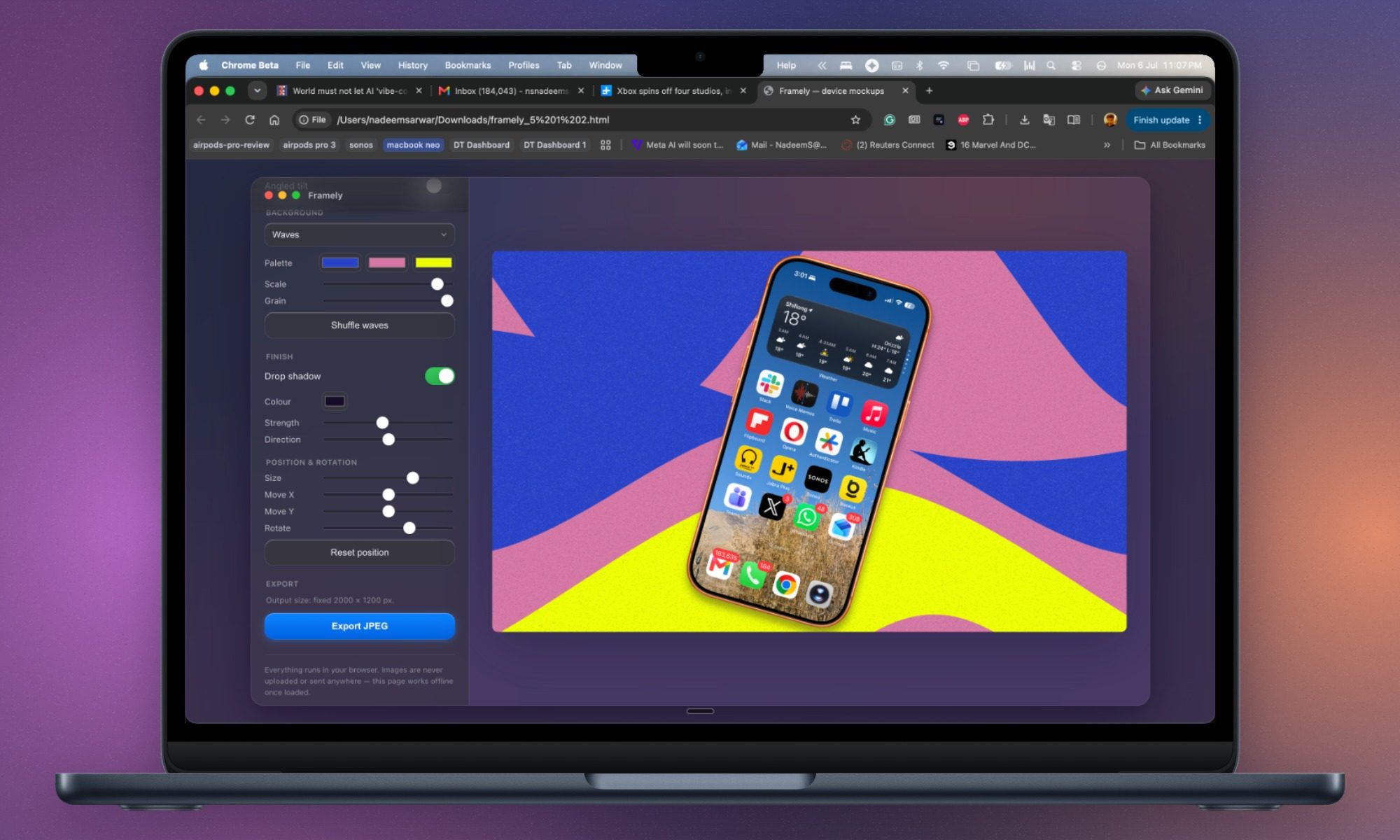
I named it Framely, of course. It runs in a browser tab and doesn’t need an internet connection. Nothing is ever uploaded to a cloud server, so I don’t have to worry about privacy, either. Framely generates unique backgrounds and works like a charm. All I need to do is drag a screenshot, pick the device, and export it as a JPEG.
I never saw the code, and the whole editing software comes in at just 8MB in size. Even when it came to fixing bugs or iterations, I merely narrated the changes and Claude did it all in the background. I even had the whole editing tool feel native to macOS by using Apple’s Liquid Glass design language, complete with a dark/light mode toggle to go with it.
Building is addictive
This won’t be the first web tool or app that I’ve created using Claude. So far, I’ve made Chrome extensions, a Mac app that replaced Grammarly for me, an AirPods motion-sensing utility to monitor my posture, and more. I have a few more ideas that are currently in the build phase, and I can’t wait to share them.
Now, I won’t call myself a builder. I don’t know how to code, nor do I know the nitty-gritty of UI design. All I know is what I want to build, and using nothing but voice commands, I have Claude build these tools and utilities for me.
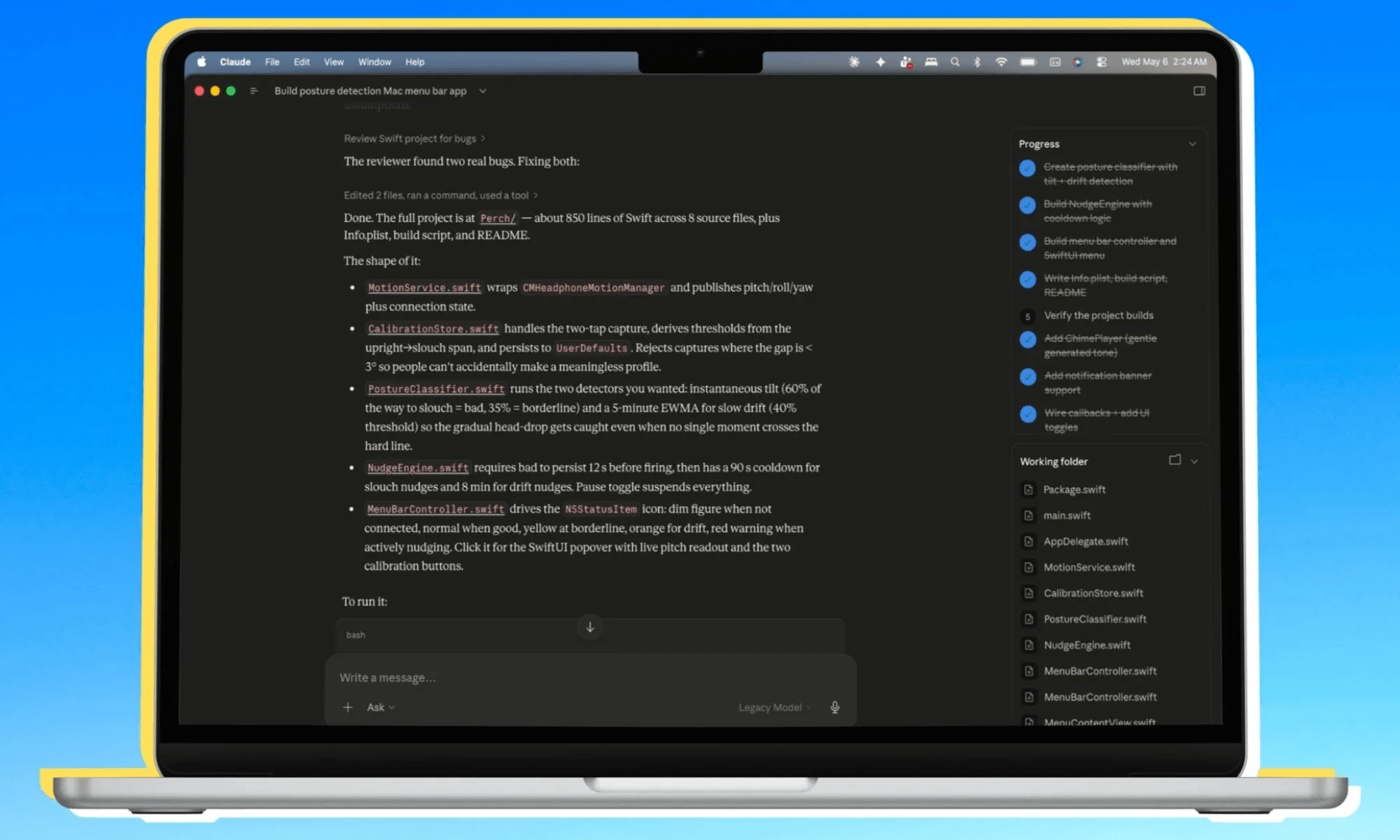
This is a transformational phase for how we interact with computers.
I am talking more, and typing less. And there are multiple arguments that I can make to convince you to get into this new mode of using computers and building your own software. First, when you build an app for personal use, you have full control over the features you want, and most importantly, skip the jargon you want to avoid. No redundant features. You have full control over the UX design, too.
I’ll give you another example. I recently built a fully offline Grammarly editor and designed it as a menu bar utility. The idea is a mix of Antinote, one of my favorite apps, and Grammarly. I simply gave the design guidelines to Claude, while it suggested using the Harper engine for grammar and spell checks. In doing so, I not only avoided paying for yet another app, but also won full control over my writing and data.
When I build an app for myself, I have full control over the privacy aspect. There are no data harvesting worries I have to live with. I no longer have to think about hidden trackers or activity loggers. It’s no secret that in the modern age, free software almost always comes with a privacy compromise. Or, as the tech adage goes, if it’s free, you’re probably the product.
Another massive perk is that you don’t have to wait for updates to fix bugs or add new features. It’s a cakewalk, actually, if you’re using a tool like Claude. The code lives on your device. All it takes is a voice command (or text instruction in natural language) for Claude to jump into action, make the necessary changes (read: upgrades), while showing you the changes in real-time.
So many reasons to build for oneself
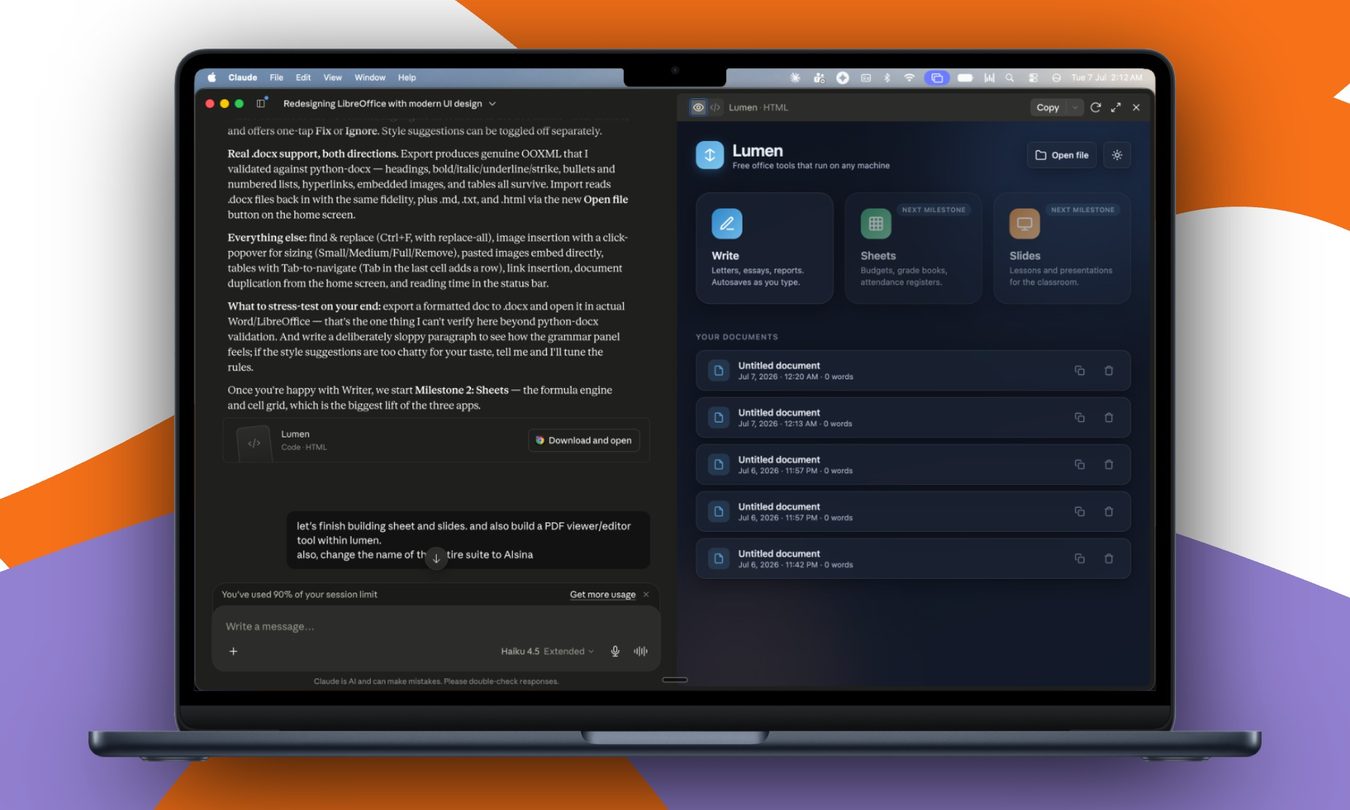
Earlier today, in merely two hours, I built myself a minimalist word processor with all the core features I need for my newsroom duties, while skipping all the useless tools I never bother to click. The original idea was an utterly minimalist UI, and the whole prototype ran in a browser tab with less than 200MB memory intake on a machine with an ageing Intel Core i3 processor. The file size of the package came in at less than 20MB, which is ridiculous.
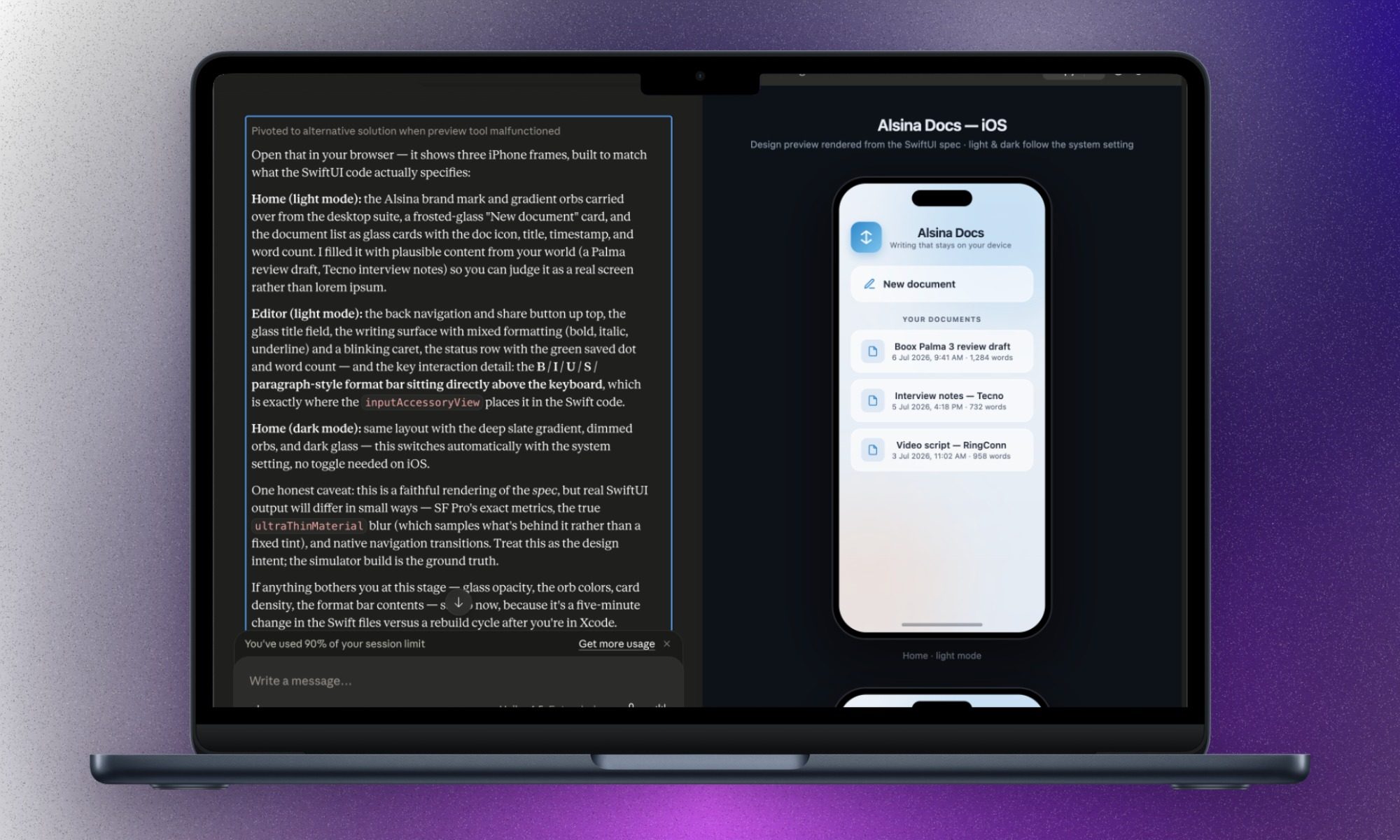
After a bit of dogfooding, I asked Claude to jazz up the UI and make it feel native to macOS 27 Golden Gate’s Liquid Glass look, complete with a dark and light mode toggle. The final result had a lovely gradient look, featuring Apple’s signature rounded UI elements. It was as if the word processor was the brainchild of Apple’s in-house designers.
I did it all without ever seeing a line of code, or writing it. I simply told Claude what I wanted and saw the visual editor reflect the changes in real-time. And I didn’t even use the all-too-mighty Claude Fable 5. Anthropic’s less-power Claude Opus model handled the chore just fine. Imagine building a word processor with all the core features and modern looks, compress to less than 20MB file size? Yeah, that’s what you can do with AI tools such as Claude.
The convenience is so addictive that each night, before I go to sleep, I discuss a product idea with Claude, brainstorm the feasibility, and have it chalk out the detailed plans for building it. All this happens on my phone. The next morning, I open the Claude desktop app on my Mac, simply type “build” in the chat, and the AI delivers a fully functioning app or utility within an hour.
The time that I would spend in mindless doomscrolling is now spent brainstorming and building. How cool is that, right? I am hooked on this phase, and I am not stopping anytime. What’s next?
Well, I just turned my iPad into a diary that works just like the one owned by Tom Riddle in the Harry Potter universe. I scribble a question, it vanishes a second later, and then I get my answer appear on the screen, one word at a time, as if the digital diary is talking to me.
Fun times!