  1. Home
  2. Computing
  3. News

Claude Reflect is here. It’s your usual yearly Wrapped, but with Anthropic’s AI

It also makes you reflect on your usage and reminds you to take breaks.

Add as a preferred source on Google
Page, Text, Business Card
Anthropic

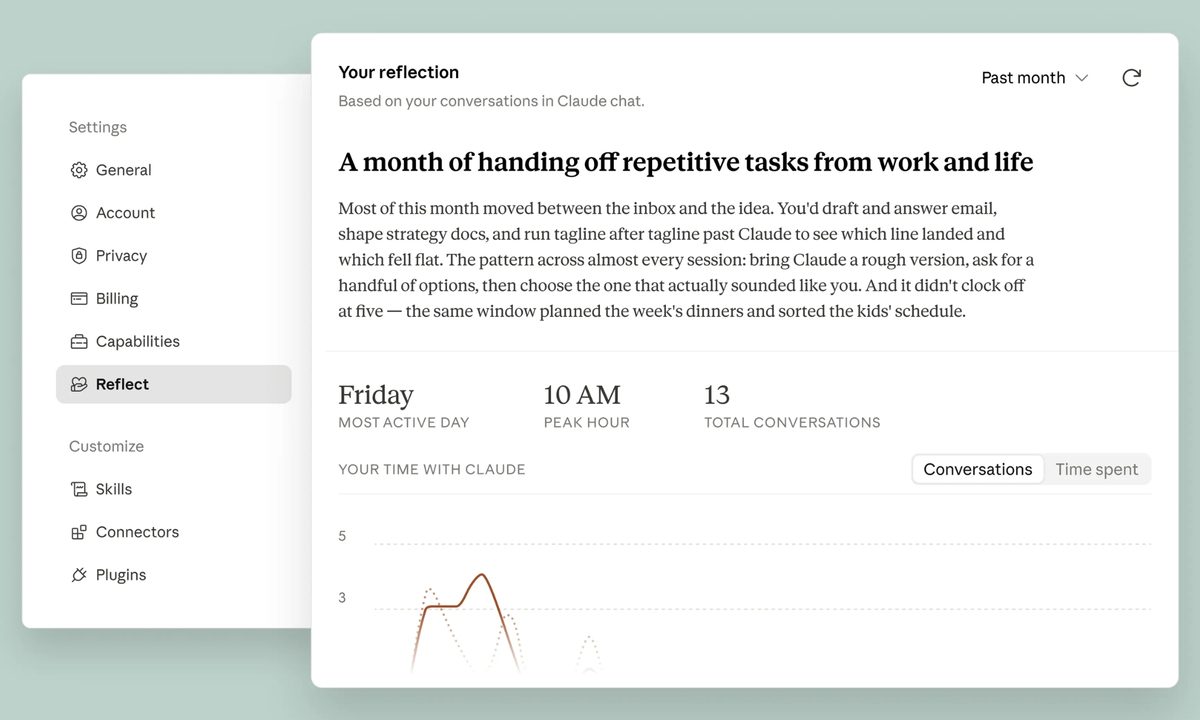
Anthropic just launched a usage analytics dashboard for Claude. It’s like the ‘Wrapped’ feature you see every major streaming or AI service announce at the end of a year, except it’s not called Claude Wrapped.

The feature is called Claude Reflect, as it does more than simply tell you what you’ve been using the AI for. Available in beta for free, Pro, and Max users who have enabled memory, the feature encourages mindful use of Claude or other AI tools. 
So what does Claude Reflect actually show you?

Available in Settings in Claude’s web and desktop apps, Reflect generates a summary of your Claude activity for one, three, six, or 12 months. 

Recommended Videos

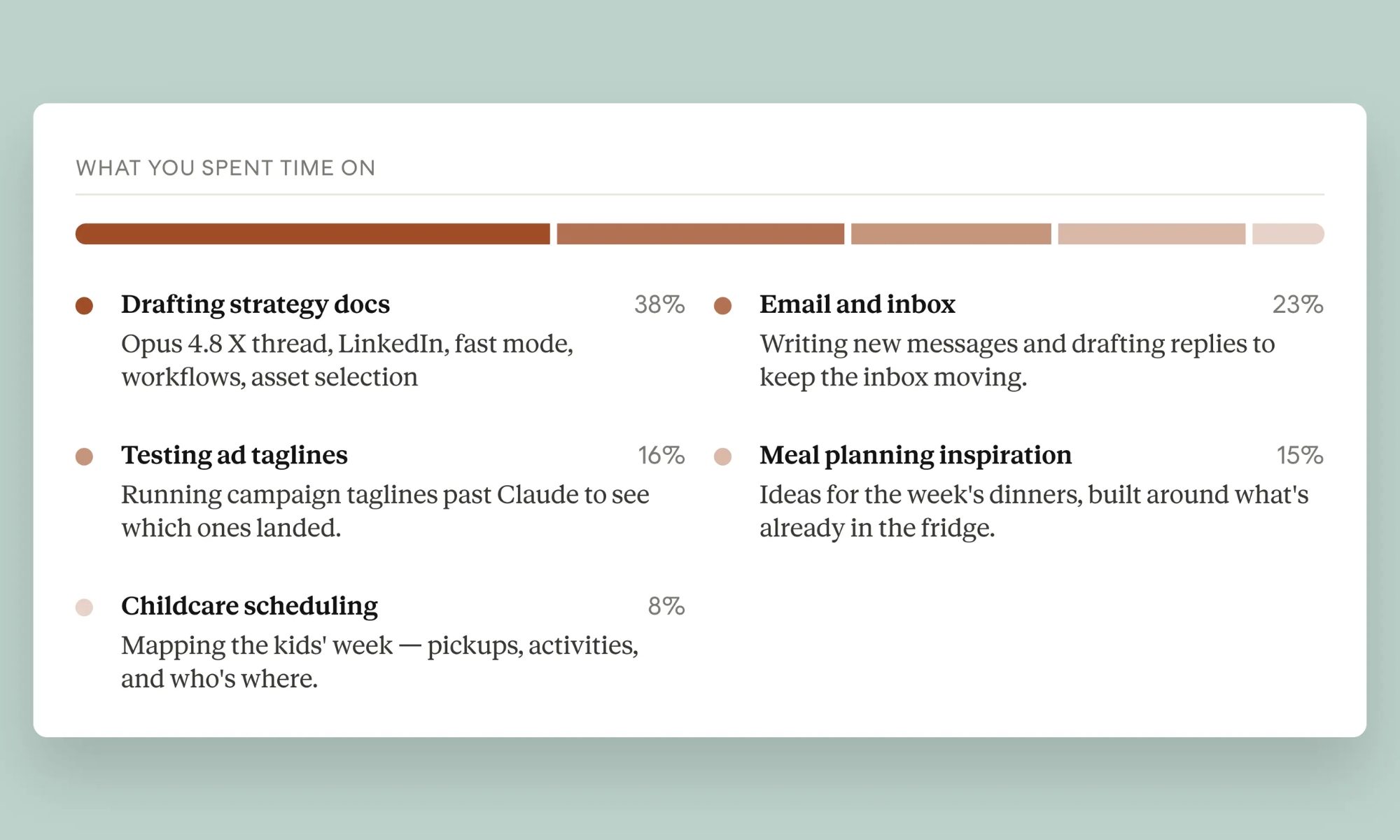
It breaks down the topics you engage with most, identifies patterns in your usage, and categorizes your interactions using Anthropic’s 4D AI Fluency Framework: delegation, description, discernment, and diligence. 

Think of it as a structured breakdown of how you work with AI rather than just a raw count of conversations and topics. The feature has been developed with MIT Media Lab, the Digital Wellness Lab at Boston Children’s Hospital, and the Family Online Safety Institute.

Anthropic also clarifies that incognito and health-integration conversations are excluded entirely. The data remains in the dashboard and is not used for any other purpose (via Anthropic).
Why is the wellbeing angle the most interesting part?

Because you don’t expect it from a company that sells AI-based tools and services. 

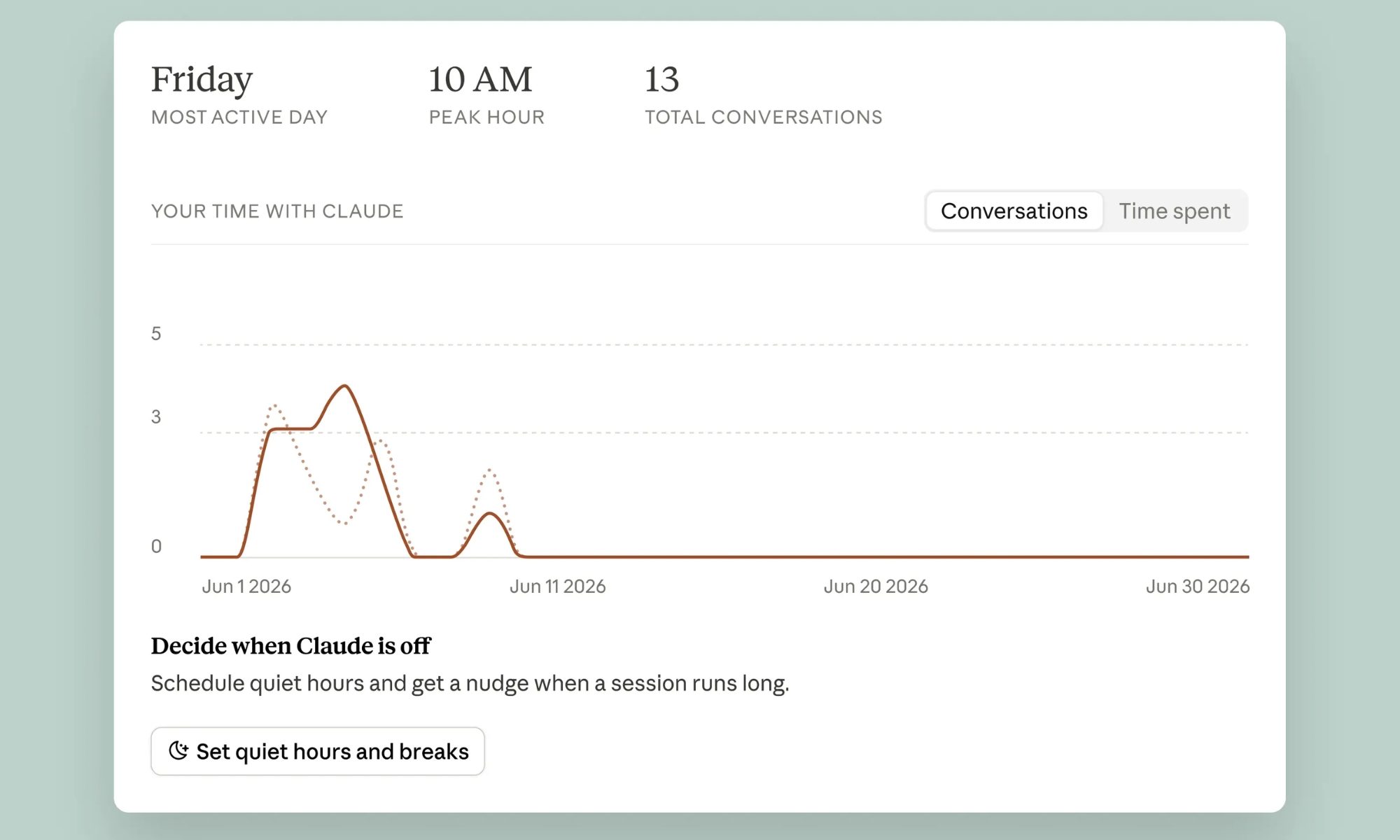
Reflect will surface questions like “What’s one thing you want to keep doing yourself, even if Claude could do it faster?” It lets you set quiet hours, and schedule nudges you to take a break. 

A time-spent view is coming soon as well, which, as the name suggests, will likely track the time you spend interacting with Claude. 

An AI company building something that actively nudges you to rely on AI less is, frankly, unusual, and I mean that as a compliment. 

Shikhar Mehrotra
For more than five years, Shikhar has consistently simplified developments in the field of consumer tech and presented them…
Windows 11 Search is getting bigger, but only by 4 pixels
The change could be in preparation for the upcoming Ask Copilot feature
Windows 11 Laptop

If you have used Windows 11 Search after the June update, you may have noticed it feels a little less annoying. Microsoft recently made the Start menu and Search more responsive, and also fixed one of Search’s stranger limits by letting it find local files using just two characters.

Now, the company appears to be making a much smaller change. According to Windows Central, Microsoft accidentally revealed that the search box in the Taskbar and Start menu is getting 4 pixels taller. Four pixels sounds like the kind of change only a UI/UX designer could love, but screenshots from the Insider Preview build suggest it is visible once you know where to look.

Read more
Parents worry AI is becoming a crutch for their kids while schools struggle to keep up, survey finds
Only 1 in 3 schools has AI guidelines as nearly 50% parents grow anxious about kids leaning on AI too much.
a boy using iPhone

Kids are using AI for their homework, and half of their parents are not sure that's a good thing. Deloitte's 2026 Back-to-School Survey, which polled 1,207 parents of K-12 students, found that 49% worry their child relies on AI too much.

The findings suggest AI adoption is moving far faster than the policies meant to guide it, leaving many parents unsure how these tools are being used in education.

Read more
Samsung wants to put its own chip in your next PC and it’s all about speeding up AI chores
Samsung Custom Chip

Samsung may be plotting a new entry into the PC chip business. A new report from the Korea Economic Daily says Samsung’s System LSI division is developing a dedicated AI accelerator for PCs called Gaia. The company has reportedly supplied early samples to Lenovo and HP for performance testing, with mass production potentially beginning as early as 2027.

Prominent Samsung leaker Ice Universe described the project as the company’s return to the PC processor market after roughly 13 years. However, the details point toward something slightly different from a traditional laptop processor. Gaia might be a specialized companion chip designed to handle artificial intelligence workloads rather than a complete replacement for an Intel, AMD, or Qualcomm CPU.

Read more