  1. Home
  2. Computing
  3. News

Google quietly rewrote Chrome’s AI documentation with important answers to on-device AI downloads

Google quietly clarified how Chrome handles on-device AI downloads.

Add as a preferred source on Google
Google Chrome with Gemini
Google Chrome

I remember Chrome quietly downloading a 4GB AI model onto PCs. It raised plenty of eyebrows in May 2026. The next day, a Chrome executive clarified how on-device AI is core to its “developer & security strategy,” and that the model processes data locally. 

Now, Chrome has updated its support documents to explain the download and, more importantly, include an option to stop it. 
So what exactly changed in Chrome’s documentation?

Google has quietly updated Chrome’s On-device AI support page between July 29 and August 1 (via WindowsReport). As part of the update, it added four entirely new sections about eligibility requirements, download conditions, guidance for multiple users and devices, and enterprise-specific rules. 

Recommended Videos

As mentioned in the eligibility section, Chrome won’t even attempt to download any AI models unless your device has the right hardware to run them. In simpler words, unsupported or incompatible machines get skipped entirely. 

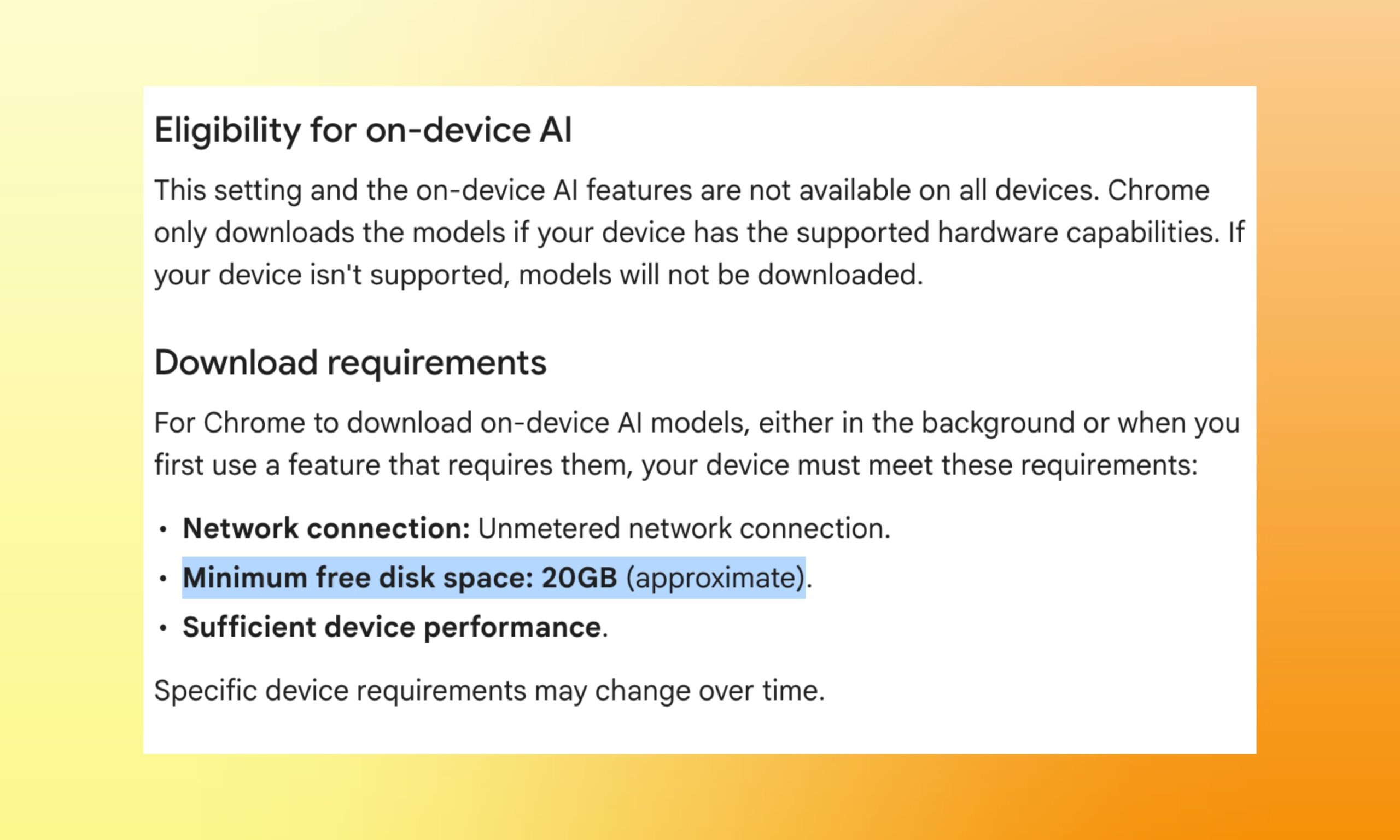
For devices that do qualify, however, Chrome now says it checks for an unmetered internet connection, along with roughly 20GB of free disk space (including the 4GB AI model). It also analyzes whether the device has enough processing power before downloading anything.
How are you actually supposed to manage this stuff?

Google’s also being clearer about control now. 

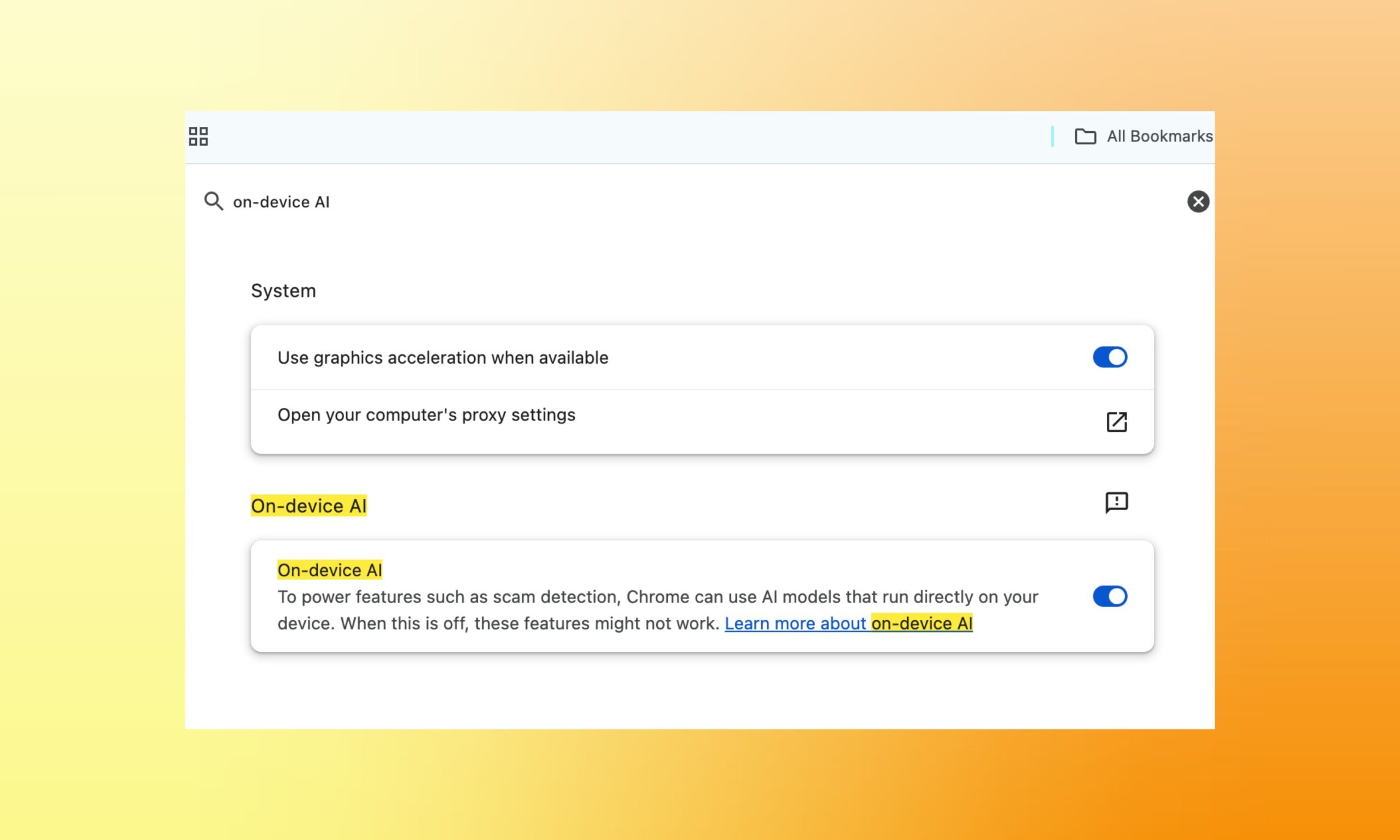
The documentation states the “On-device AI” toggle in Chrome’s settings is the only supported way to manage these downloads. It also warns against manually hunting down and deleting model files yourself. Doing that won’t stop Chrome from redownloading them. 

When you switch the toggle off, Chrome removes the downloaded files and disables everything that’s based on them. It only checks eligibility again and redownloads if you flip it back on, but not otherwise. All of this is on a per-user and per-device basis, with IT admins getting separate control through Chrome Enterprise Policy.

This update lands months after people first noticed Chrome silently downloading Gemini Nano, its roughly 4GB on-device AI model, without clearly asking first. Google hasn’t directly connected the dots, but the timing here doesn’t feel coincidental, at least to me.

Shikhar Mehrotra
For more than five years, Shikhar has consistently simplified developments in the field of consumer tech and presented them…
Wispr Flow launches an AI note-taker that works without joining calls
The new Wispr Flow tool called Notetaker creates live transcripts, summaries, and follow-up notes
Page, Text

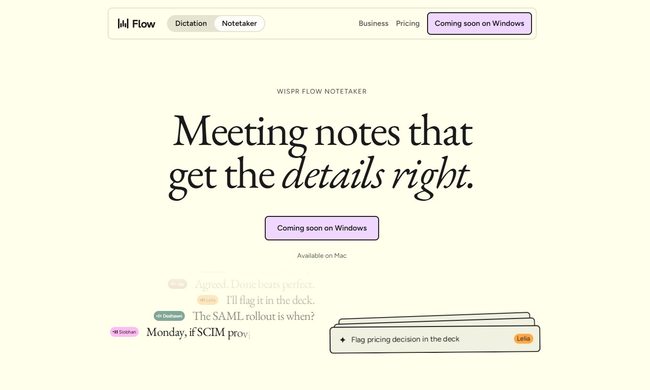
Wispr Flow has launched Notetaker, an AI meeting assistant built into its existing Mac app. It can record conversations, show a live transcript, and prepare notes covering decisions, deadlines, assigned work, and unresolved issues.

Wispr Flow is best known for its dictation tool, which turns spoken thoughts into edited text wherever the user is working. Notetaker takes the company beyond voice typing and applies its transcription technology to meetings, interviews, and in-person conversations.

Read more
Google Assistant finally has a shutdown date, and it’s only weeks away
Google Assistant starts shutting down September 4 as Gemini takes over.
google assistant mobile.

Google Assistant’s long goodbye now has a firm date. Google says it will begin discontinuing the voice assistant on eligible mobile devices on September 4, 2026, according to an email sent to users and shared publicly on Reddit.

The transition may take several weeks, so Assistant won’t vanish from every device at once. Once the change reaches an eligible Android device, Gemini will replace Assistant with no option to switch back.

Read more
ChatGPT Atlas is shutting down and it has some homework left before you migrate
OpenAI is pulling the plug on Atlas, so start packing your bookmarks
ChatGPT Atlas browser on a MacBook.

ChatGPT Atlas is heading toward an early grave, and anyone still using OpenAI's browser has a small pile of homework to finish before the shutdown. OpenAI has confirmed that Atlas is scheduled to stop working on August 9, 2026.

After that date, the browser may no longer be operational. So users won't be able to browse the web or get access to its agent-powered workflows. Meanwhile, the company is moving those browser-based capabilities into ChatGPT and Codex. But unfortunately, the transition isn't as convenient as users may hope.

Read more