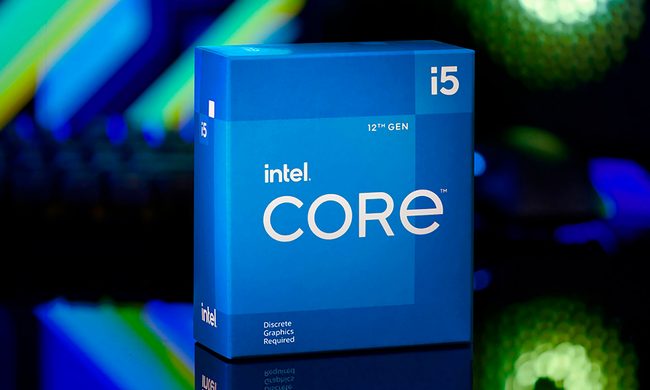
There are some components that your PC can live without, but a solid processor is not one of them. Without the CPU, your computer cannot run, period. This is why CPU failure is often a complete disaster. Luckily. the warning signs are usually very clear. But how long can you enjoy your CPU before getting to a place where it’s no good anymore?
Good news: Most CPUs last a long time before failing, but there are exceptions. Below, we’ll explore how long CPUs last and tell you how to keep yours alive as long as possible.
How long do CPUs last?

If you look after your CPU, it can easily last for eight to 12 years before failing, but many CPUs will never straight-up die on you. However, this is not a hard and fast rule; even if you take good care of your computer, your CPU might fail a lot sooner due to faults in hardware or software. Similarly, if you push it too hard, the processor will wear out faster.
Unlike components such as HDDs or coolers, CPUs don’t have any moving parts. On a hardware level, they should be fine for a long time as long as they’re installed properly. However, every CPU requires some basic maintenance, and certain use cases can make it struggle a lot more. That’s partly why it’s hard to estimate the actual lifespan of a consumer processor.
One of the most popular ways to measure CPU endurance is mean time to failure (MTTF). MTTF is a reliability metric that estimates the average time a component is expected to operate before failing. You’ll find a similar metric for solid-state drives SSDs, which are also known to last a long time, but perhaps not as long as CPUs.
The problem with MTTF is that Intel and AMD typically don’t disclose their MTTF estimates for their CPUs, so for most of us, it’s not much of a guideline. An old study from the University of Illinois said that chip makers target an MTTF of around 20 years, but this was in 2006. Now? It’s anybody’s guess. MTTF is more commonly used in the context of enterprise and server-grade CPUs, anyway, so it’s no wonder that Intel and AMD don’t put it on their spec sheet.

Metrics aside, most CPUs can last well beyond the time when you might replace them, but after a few years, they no longer perform as well as they did right out of the box. CPUs are a lot like graphics cards (at least in that regard) and new technologies usually mean upgrades every two to three generations. Unfortunately, a CPU upgrade also means buying a new motherboard.
There’s another side to this CPU-shaped coin, though. While your CPU may live long and prosper, some chips won’t. We’ve seen this quite recently with Intel’s 13th- and 14th-gen CPUs. Some of those chips are unstable in games due to what appears to be microcode problems. Such CPUs fail not due to age or usage, but due to faults that are beyond your control — although, in this particular case, undervolting the processor is said to help.
Some CPUs are faulty out of the box and may fail within months of your purchase. Once those first few months have passed, you’re most likely in the clear and should have a functioning CPU for the years to come. AMD and Intel usually offer three-year limited warranties on their products — after that, you’re on your own.
What affects CPU longevity?

These days, consumer CPUs — especially those on the high-end side of the spectrum — are durable little beasts. Bending pins during the installation got a lot harder, CPUs deal with temperatures a lot better, and chips are made to handle many workloads at once for countless hours over a longer period of time. However, how long that period of time is going to be is somewhat up to you.
Here are the three factors that play the biggest part in how long a CPU can last.
Temperatures
These days, CPUs can withstand really high temperatures — but at some point, enough is enough. Although you’re unlikely to burn your CPU in one go, frequent overheating damages your CPU, chipping away at its lifespan little by little. The exact temperature to aim for depends on the CPU and the manufacturer. For example, AMD chips tend to run a little hotter than Intel’s.
How do you prevent thermal stress? Get yourself a good cooler, and remember that high-end CPUs often call for a liquid cooling setup instead of a fan. Your case also needs plenty of airflow, with proper air intake and exhaust routes planned out. Once you’re all set up, check your CPU temperature during gaming and other heavy workloads to make sure it’s not too toasty.
Voltage and overclocking
Overclocking a CPU can give you a bit of extra performance by boosting the clock speed, and doing so safely is usually OK — AMD and Intel both provide tools that make this more accessible, but those tools also shouldn’t let you push your CPU past a certain limit. Overvolting goes hand in hand with overclocking, meaning that you increase the voltage to give the CPU the extra juice it needs to run at the speed you want to achieve.
Both overclocking and overvolting are safe in theory, but they can wear out your CPU. They can also void your warranty.
Maintenance
Giving your PC a bit of care every now and then can go a long way. For the CPU, temperatures are crucial, so cleaning the inside of your computer becomes less of an option and more of a necessity. This includes applying new thermal paste.
Signs of CPU failure

If you’re one of the unlucky owners of Intel’s Raptor Lake CPUs, you know all about the signs of CPU failure. It doesn’t always have to mean that your computer will become completely unusable, although if it gets to that point, there’s rarely a way to come back from it.
Here are some telltale signs that might mean your CPU is failing:
- System freezes
- Crashes, both when running resource-heavy apps and on desktop
- Blue screen of death (BSOD)
- Overheating and thermal throttling
- Thermal shutdowns due to high temperatures
- Sluggish performance, frame rate drops
- Stuttering
- Failure to boot
- No power-on self-test (POST)
- Beeping sounds coming from the motherboard
- Corrupted data
The worst part is that these signs, while indicative of CPU failure, could also mean something else. If you’re not sure, it’s best to give your PC a bit of a break and do some serious troubleshooting to try and figure out which component might be misbehaving.