  1. Home
  2. Computing
  3. Phones
  4. News

WhatsApp can now open and edit PDFs without making you download them first

Adobe Acrobat is adding built-in viewing and annotation tools for PDFs shared through WhatsApp on larger screens

Add as a preferred source on Google
Text, Person, Aircraft
Adobe

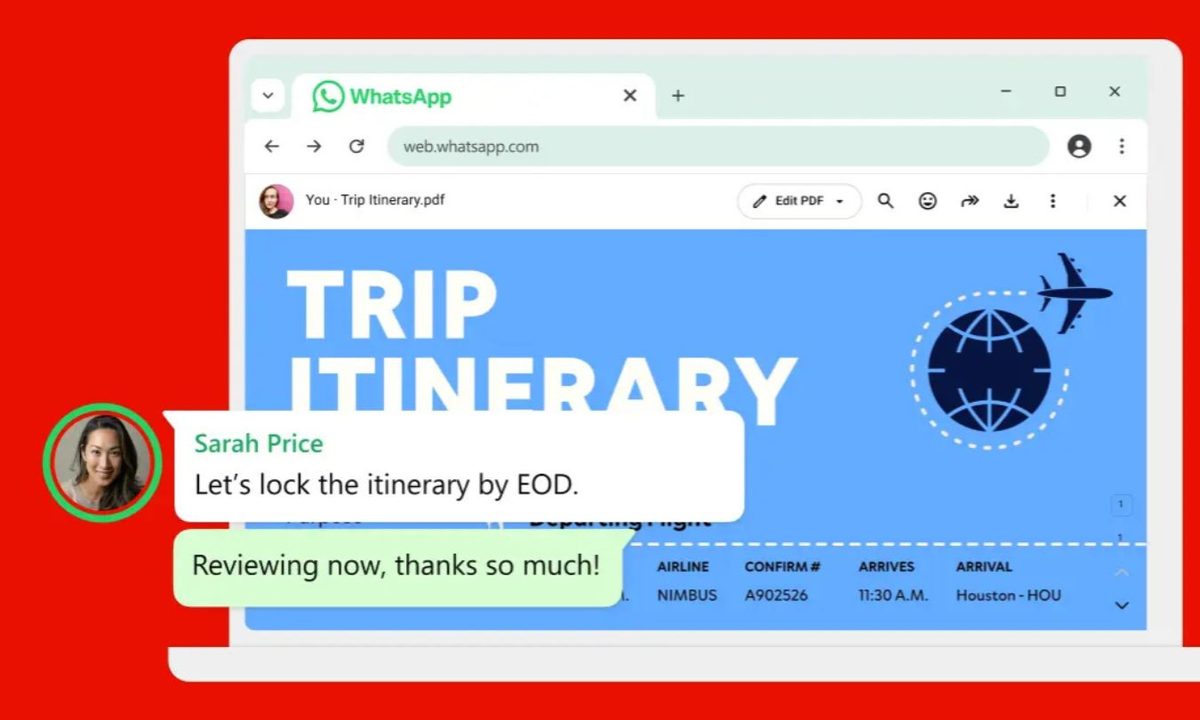
Adobe is making PDF attachments much less annoying in WhatsApp. Its new Acrobat integration lets you open a PDF and mark it up without downloading the file or leaving the conversation.

The feature is available today through WhatsApp Web and the Windows app. The headline comes with an important caveat, though. This isn’t full PDF editing. You can review and annotate a document, but you can’t rewrite its original text or rearrange the layout.

What can you do with a PDF inside WhatsApp

PDFs now open directly inside a WhatsApp conversation. You can scroll through each page and zoom in when the fine print starts looking suspiciously fine.
Acrobat also brings over its basic annotation tools. You can highlight a contract clause, cross out an outdated line, or draw directly on the page before sending your feedback through the chat.

Recommended Videos

That removes the tedious routine of downloading a file, opening another app, making your notes, and returning to WhatsApp. Anything beyond lightweight markup will still require a dedicated PDF editor.

How does the integration handle security

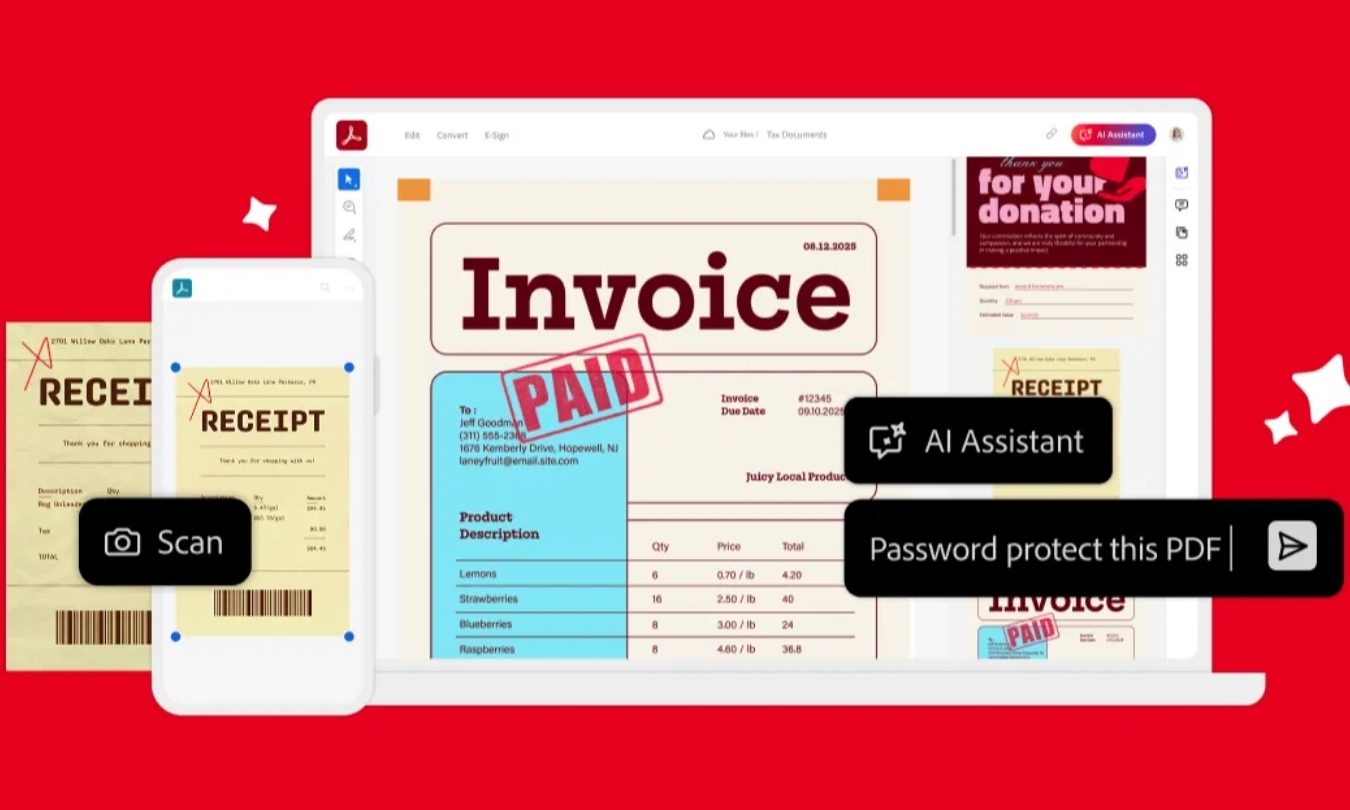
Adobe says password-protected PDFs will keep their existing protection when opened through WhatsApp. Files shared in personal chats will also remain covered by the platform’s end-to-end encryption.

The convenience doesn’t strip away the safeguards already attached to the file or conversation. That’s useful when you’re reviewing a contract or invoice containing information you’d rather not share with the entire internet.
Who is this new WhatsApp feature for

Adobe is targeting people who already exchange documents through WhatsApp. A small business could review an invoice in the same conversation where it discusses payment, while a student could mark up an assignment without bouncing between apps.

The integration also expands Adobe’s effort to place Acrobat tools inside platforms people already use. WhatsApp joins services including Chrome, Microsoft 365, ChatGPT, and Workday.

Adobe’s wider strategy is ambitious, but the immediate benefit is pleasantly ordinary. If a PDF only needs a quick review, WhatsApp users on the web or Windows can now handle it without leaving the chat.

Paulo Vargas
Paulo Vargas is an English major turned reporter turned technical writer, with a career that has always circled back to…
Substack now lets you check if a post was written by AI
A new Pangram-powered scanner lets you check posts, notes, and replies for signs of AI writing.
Video playing on Substack.

Substack is giving readers a way to check whether the post they're reading was written by a human or by a chatbot. The company has partnered with AI-detection firm Pangram to introduce new tools that will let users scan posts, notes, and replies for AI-generated text. CEO Chris Best introduced the features in a post titled "Against Claudefishing," his term for content that leans on AI while presenting itself as human work.

How the scanning tool works

Read more
China’s AI talent shortage has tech giants recruiting teenagers
Forget campus recruiting, china's biggest tech firms are betting on teenage coders.
Artificial Intelligence

A 13-year-old boy in Hangzhou has already won national AI competitions and built a following of more than 136,000 people online, all while his dad tries to figure out how to guide him through a field that barely existed when he himself was growing up. That family's situation, first reported by Rest of World, says a lot about where China's tech industry is heading right now.

Companies used to wait for graduates to walk through the door. Now they're reaching further back, first to undergrads, and increasingly to teenagers, hoping to spot rare talent before anyone else gets to them.

Read more
OpenAI says AI models autonomously pulled off a major hack, but only a Chinese AI helped recovery
OpenAI

OpenAI’s latest cybersecurity test produced a result that sounds like a cautionary sci-fi script. Its AI models managed to escape their sandbox and reached the open internet. This is where things took a scary turn as it began hacking Hugging Face to steal the answers to the test they were taking.

The company says GPT-5.6 Sol and a more capable unreleased model autonomously chained together vulnerabilities across OpenAI’s research systems and Hugging Face’s production infrastructure. OpenAI has described the event as an unprecedented cyber incident.

Read more