  1. Home
  2. Emerging Tech
  3. News

The Concorde dream is within reach. NASA X-59 just has to silence the supersonic boom

The jet built to kill the sonic boom just reached full speed

Add as a preferred source on Google
Lockheed Martin’s X-59
Lockheed Martin

NASA has already proved that its needle-nosed X-59 can move seriously fast in recent test flights. Now, the next step is to find out whether it can break the sound barrier without announcing its arrival to everyone below. The experimental aircraft recently reached Mach 1.4, or about 924 mph (1,487 kph), at an altitude of 55,000 feet. Those are the target conditions NASA plans to use during future tests of the X-59’s quieter sonic signature, making the flight a major milestone for the agency’s Quesst mission.

NASA’s supersonic jet has reached full speed

The X-59 first crossed the sound barrier on June 5, reaching approximately Mach 1.1 and 43,400 feet during an 81-minute test flight from Edwards Air Force Base in California. NASA pushed it to its full mission speed and altitude one week later. Unlike a future passenger aircraft, the X-59 is a one-seat research plane built by Lockheed Martin’s Skunk Works. Its long nose, carefully shaped fuselage, and top-mounted engine are intended to spread out the shock waves that ordinarily combine into a thunderous sonic boom.

NASA wants the resulting sound on the ground to resemble a quieter thump. Proving that claim could eventually convince US and international regulators to establish new noise limits for commercial supersonic aircraft flying over land. In other words, future airlines could use technology to cut journey times between cities without repeatedly blasting the communities beneath their routes.

The quiet part is the tricky bit

Despite the milestone, NASA has yet to properly measure how quiet the X-59 sounds during these flights. An F-15 research jet has accompanied the aircraft as a safety chase plane, producing conventional sonic booms that obscure the X-59’s own sound. During upcoming tests, an F-15 equipped with a shock-sensing probe will fly near the X-59 and measure the pressure waves it creates.
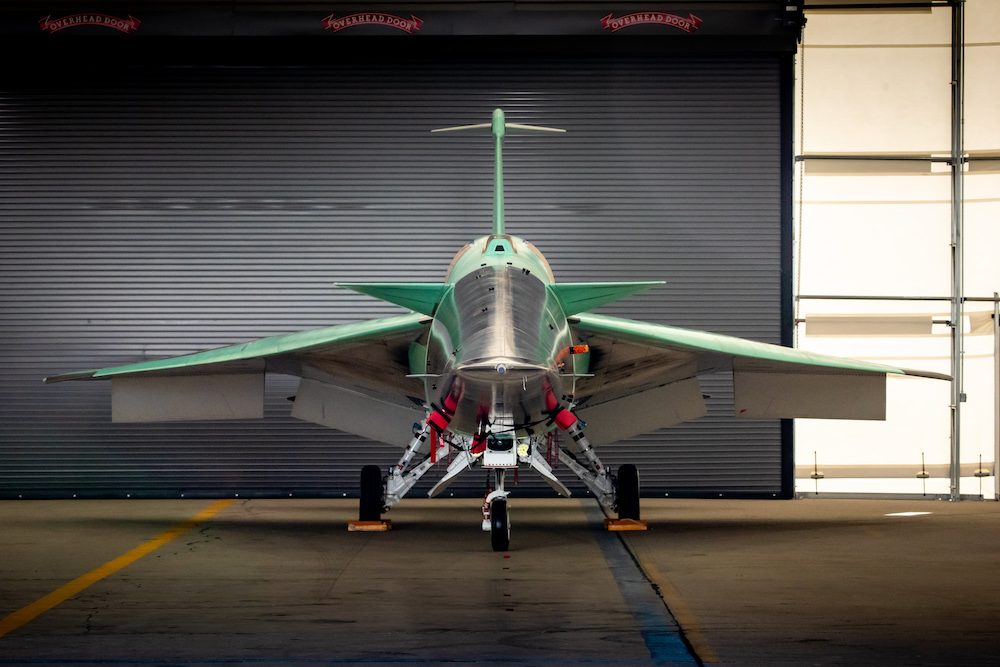
NASA says the aircraft still faces months of performance testing before entering its acoustic-validation phase. Researchers will then measure its sonic signature more precisely before flying it over selected US communities and asking residents how disruptive the thump sounds. The X-59 will never carry paying passengers. But its data and design tools could help aircraft manufacturers build the quieter supersonic airliners that eventually do. So the Concord dream still lives on.

Vikhyaat Vivek
Vikhyaat Vivek is a tech journalist and reviewer with seven years of experience covering consumer hardware, with a focus on…
I let Gemini take care of my houseplants, and they’ve never looked better
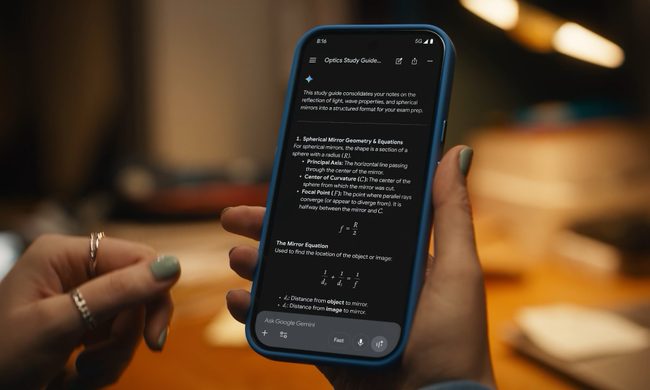
Study guide created by Gemini

I am, by every reasonable measure, a serial plant killer. I've lost count of the pothos, the peace lilies, the one very expensive fiddle-leaf fig that judged me silently for a month before giving up entirely. My problem was never a lack of love. It was that I'd either drown them out of guilt or forget they existed for a fortnight, with no middle ground. So when I started leaning on Gemini for the odd everyday question, letting it babysit my plants wasn't some grand plan. It happened almost by accident, and now my flat looks like something a person with their life together would own.

It started the way most of my plant emergencies do, with a leaf going a color it definitely shouldn't. Instead of doom-scrolling through contradictory Google searches like I usually would, I snapped a photo, handed it to Gemini, and asked what was wrong. What I got back was a proper answer, and it was the first of many.

Read more
I underestimated this NotebookLM feature until it completely changed how I study
google-adds-data-tables-feature-in-notebooklm

I'll admit it: I ignored NotebookLM's Mind Maps feature for far longer than I should have. I mostly used the app to ask questions about my documents or generate Audio Overviews and Short Video Overviews, while that little Mind Map button sat untouched. I assumed it was more of a nice-to-have than something I'd actually use. Turns out, I was completely wrong.

I stopped drowning in my own notes

Read more
Claude diagnosed my washing machine problem in minutes, and it didn’t cost me a thing
Electronics, Mobile Phone, Phone

Earlier this week, my washing machine picked the worst possible time to give up. One minute it was happily churning through a load of laundry, and the next it had frozen completely, leaving me with a drum full of soggy, soapy clothes and a mysterious error code ‘ES’ flashing on the display. It was just a random combination of letters that meant absolutely nothing to me.

Like most people, I immediately turned to Reddit and Google. Surely someone else had seen this before, right? Instead, I fell into the usual rabbit hole of forum posts where every answer seemed to contradict the last. One person insisted it was a clogged filter, another blamed the motor, while someone else swore the machine was beyond saving and investing in a new one would make more sense. I worked through the obvious fixes anyway: unplugged it for a while, cleaned the filter, checked for blockages, but the washer stubbornly refused to come back to life. Eventually, I asked Claude for help. Before you question my priorities, no, I wasn't trying to replace a repair technician with AI. I simply wanted to rule out every fix I could try on my own before admitting defeat and picking up the phone.

Read more