  1. Home
  2. Emerging Tech
  3. News

This tiny MacBook accessory adds customizable shortcuts for meetings and productivity

Finally, a button that saves you from awkward "You're on mute" moments

Add as a preferred source on Google
Dune
Dune Project Mirage

A new hardware accessory is looking to simplify one of the more frustrating aspects of using a MacBook: juggling different keyboard shortcuts across video calls, productivity apps, and development tools.

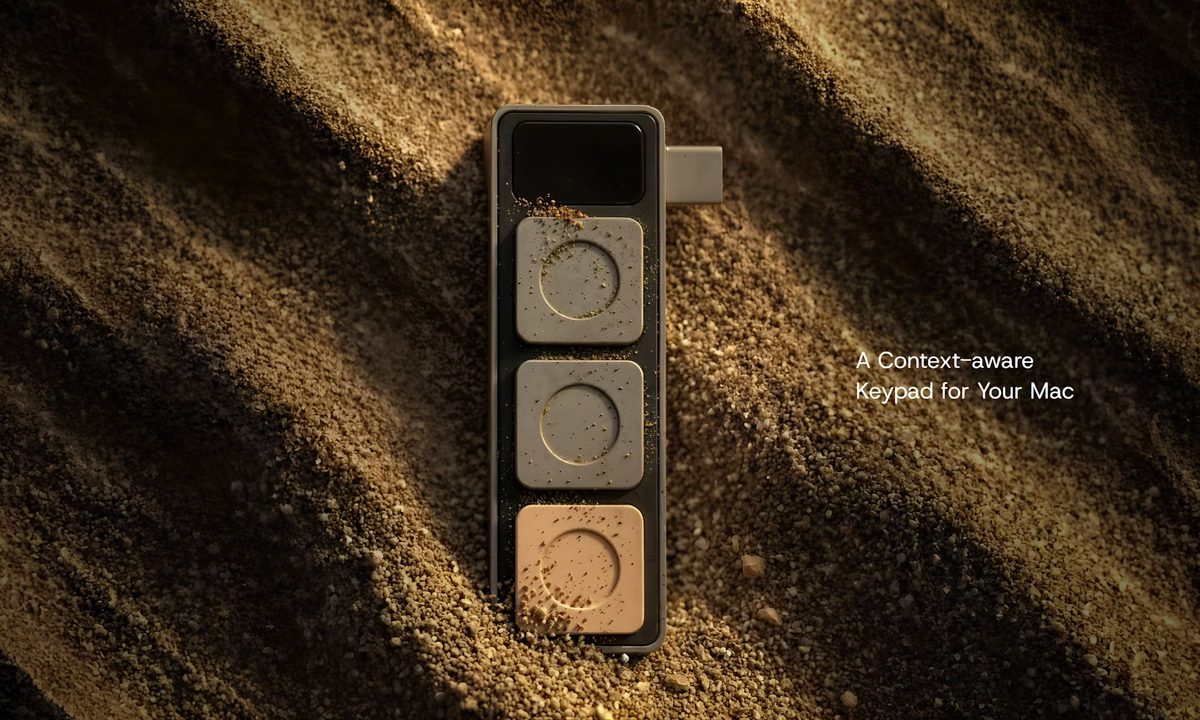
A startup Project Mirage has launched Dune, a compact USB-C accessory that adds three programmable buttons to compatible MacBooks. The device automatically changes its functions depending on the application currently in use, allowing users to perform common actions with a single press instead of memorising different keyboard shortcuts.

Dune combines context-aware controls with AI-powered customization

Unlike traditional macro keypads, Dune is designed specifically for MacBooks and is custom-built to match different laptop models, allowing it to sit flush against the side of the device. The accessory plugs directly into a USB-C port and draws power from the laptop, eliminating the need for batteries or charging.

Recommended Videos

Its three programmable buttons adapt based on the app being used. During video calls, they can be configured to mute the microphone, toggle the webcam, or bring the meeting window into focus. In spreadsheet applications, they can become copy, paste, and undo buttons, while developers can assign actions for tools such as Visual Studio Code or GitHub.
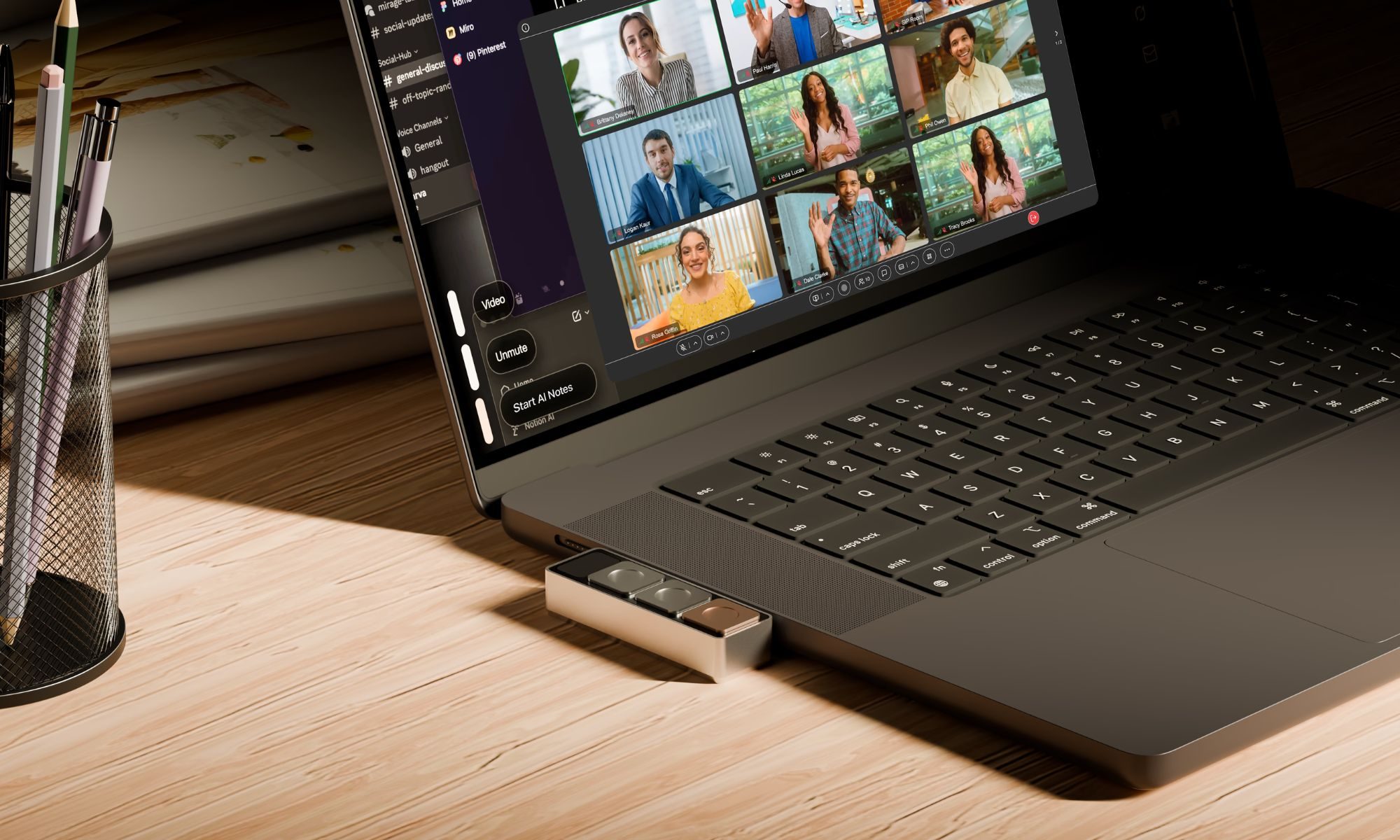
The device is currently compatible with MacBook Air models powered by the M2 chip or newer and MacBook Pro models featuring M1 Pro processors or later, running macOS Sequoia 15 or newer.

Project Mirage also ships Dune with a companion app that lets users create application-specific shortcuts or system-wide actions. Beyond simple keyboard commands, users can configure buttons to launch apps, open websites, or execute custom scripts.

One of the more distinctive features is its integration with Claude Desktop. Instead of manually writing automation scripts, users can describe the shortcut they want in natural language, allowing Claude to generate the required Python code and assign it to a button. According to TechCrunch, this makes creating custom workflows considerably more approachable, even for users without programming experience.

The companion app also integrates with calendars, surfacing upcoming meetings and allowing users to quickly join a call, dismiss reminders, or send a “running late” message with a single press.

Pricing and availability

Dune is currently available at an introductory price of US$119, after which it will retail for US$149.
As AI-assisted productivity tools continue to expand beyond software, devices like Dune suggest hardware makers are exploring new ways to make everyday computer interactions faster and more intuitive. Whether the concept catches on will likely depend on how valuable users find its growing library of customizable shortcuts and automations.


Moinak Pal
Moinak Pal is has been working in the technology sector covering both consumer centric tech and automotive technology for the…
AI agent reportedly carried out an entire ransomware attack on its own
AI didn't just write malware. It apparently clocked in for work.
Cybersecurity

Cybersecurity researchers say they have documented what could be the first ransomware attack carried out almost entirely by an autonomous AI agent, marking a significant shift in how cyberattacks could be conducted in the future. According to cloud security firm Sysdig, they have uncovered a ransomware operation dubbed JadePuffer that appears to have relied on a large language model (LLM) agent to perform nearly every stage of the attack without continuous human intervention.

If confirmed, the incident suggests AI is moving beyond writing malicious code and into actively planning, adapting, and executing cyberattacks in real time.

Read more
The Washington Post predicted how tech will advance 50 years ago and the success rate is humbling
The Washington Post predicted 2026 tech in 1976. It got a lot right.
Representative Image

Fifty years ago, when floppy disks were cutting-edge and the personal computer revolution had barely begun, The Washington Post attempted a remarkably ambitious exercise: predict what life in 2026 would look like. Some of those predictions now read like science fiction. Others feel surprisingly ordinary because they have become part of everyday life.

In a retrospective published for America's 250th anniversary, the newspaper revisited science editor Thomas O'Toole's 1976 article Inventing the Future, comparing its forecasts with today's technological reality. The results reveal that while predicting exact timelines is nearly impossible, identifying long-term scientific trends can be remarkably accurate.

Read more
Australian government warns doctors over AI scribing tools as privacy and safety concerns grow
AI medical scribes face regulatory scrutiny in Australia amid safety concerns
Representative Image

The Australian government is urging healthcare professionals to exercise caution when using AI-powered medical scribing tools, as regulators examine whether stronger safeguards are needed around one of healthcare's fastest-growing technologies, according to a report by The Guardian.

AI scribes have rapidly gained popularity by recording, transcribing, and summarising doctor-patient conversations into clinical notes, reducing the administrative burden on healthcare workers. However, government officials now warn that the technology's rapid adoption has outpaced oversight, raising questions around patient privacy, informed consent, and the accuracy of medical records.

Read more