  1. Home
  2. Phones
  3. News

WhatsApp is making it easier for channel admins to label AI-generated posts

Because not every photo in your favorite channel is as real as it looks.

Add as a preferred source on Google
WhatsApp app store listing open on iPhone
Rachit Agarwal / Digital Trends

WhatsApp already lets channel admins mark sponsored posts with a paid partnership label, a feature that started rolling out last month on Android and iOS. Now the app is cooking up something similar, but this time for AI-generated media. The idea is to keep followers in the loop when a photo or video wasn’t captured with a camera but conjured up by an AI tool instead.

How will the new AI label work?

WaBetaInfo spotted this feature brewing inside the WhatsApp beta for Android, version 2.26.31.1, currently available on the Google Play Store. Once it goes live, admins will be able to tap and hold an update containing AI-generated media to bring up the context menu, where a new “Add AI content label” option will appear. 
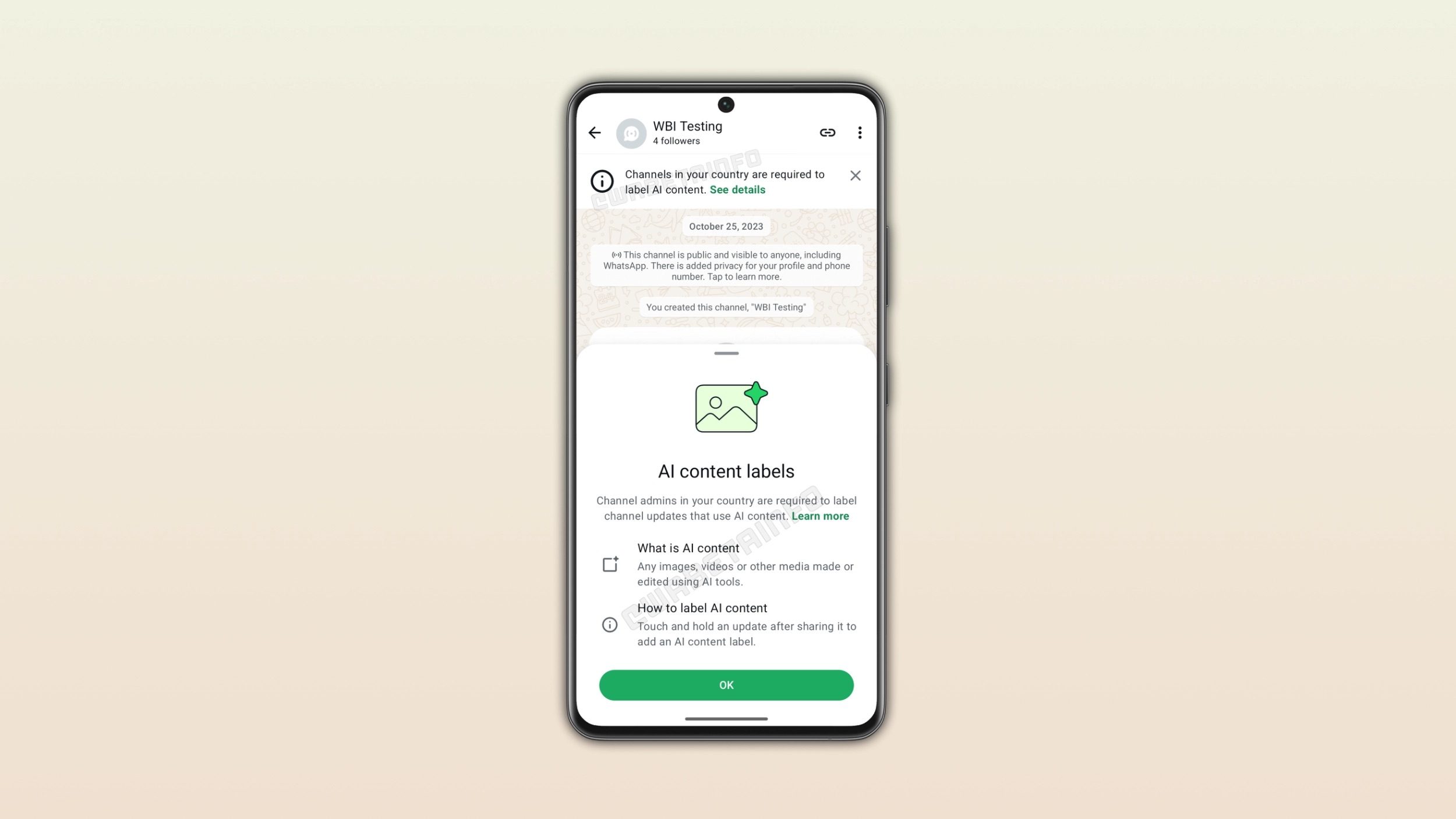
Tap it, and a visible tag gets attached to the message bubble so followers instantly know they’re looking at AI-made content. Once the label is added, admins likely won’t be able to remove it, so it pays to double-check before hitting share.

Recommended Videos

Not everything needs the tag, though. Plain text messages, even ones drafted using WhatsApp’s own Writing Help tool, seem to be exempt from this rule. 

Why do admins need this AI label?

Turns out, it’s not just about being a good digital citizen. Several countries now have laws that require apps to disclose AI-generated media, and this label gives admins a simple way to stay compliant without extra hassle. Best of all, it doesn’t play favorites. Whether you made your image using Meta AI, ChatGPT, Gemini, or literally any other tool, the label applies the same way.
For now, this feature is still baking in the Android beta, and testers don’t have access to it just yet. WhatsApp is also working on bringing the same label to iOS, so it won’t stay an Android exclusive for long. There’s no word yet on a public rollout date, but we’ll keep an eye on it.


Rachit Agarwal
Rachit is a seasoned tech journalist with over ten years of experience covering the consumer technology landscape.
Meta served ads containing AI-generated child sexual abuse content, continuing years of child safety failures
Meta's own ad library hosted child abuse imagery for nine months straight.
meta-logo

Meta's ad platform did something it has promised, repeatedly, never to allow again. According to a new investigation from Wired, Meta ran dozens of paid ads over the past nine months containing explicit AI-generated child sexual abuse imagery, some of which stayed live even after the company was directly confronted about them.

If this feels like a story you've read before, that's because you probably have. Just weeks before this latest report, a separate BBC investigation found Instagram running paid ads promoting child sexual abuse material in India, directing users to Telegram channels selling illegal content.

Read more
Apple’s iCloud Private Relay isn’t as private as you think
Your real IP address might be leaking, and passkeys are the snitch.
iCloud Private Relay

If you pay for iCloud+ and rely on Private Relay to hide your IP address while browsing, you might want to pay attention to this one. New research by security researchers Tommy Mysk and Talal Haj Bakry, first reported by 404 Media, reveals that Private Relay doesn't hide your IP address as well as Apple claims.

How does the leak actually happen?

Read more
This new technology could make spotting fake products easier for everyone
Your smartphone could soon tell you if the product you bought is fake
The new system combines three technologies into a single printable label.

Counterfeit goods are becoming increasingly sophisticated, forcing brands to rely on expensive authentication systems that often require specialized scanners or proprietary hardware. Researchers now believe a smartphone could do much of that work instead. A team has developed a new printing system that creates responsive anti-counterfeit labels that are more durable, easier to mass-produce, and can be verified using nothing more than a phone. The research was published in the International Journal of Materials and Product Technology.

At first glance, the technology looks like another incremental improvement in product security. In reality, it addresses one of the biggest limitations of anti-counterfeit systems today: accessibility. If authentication only works with expensive equipment, it becomes difficult to deploy at scale. By enabling smartphone-based verification, the technology could make counterfeit detection practical for manufacturers, retailers, and even consumers.

Read more